
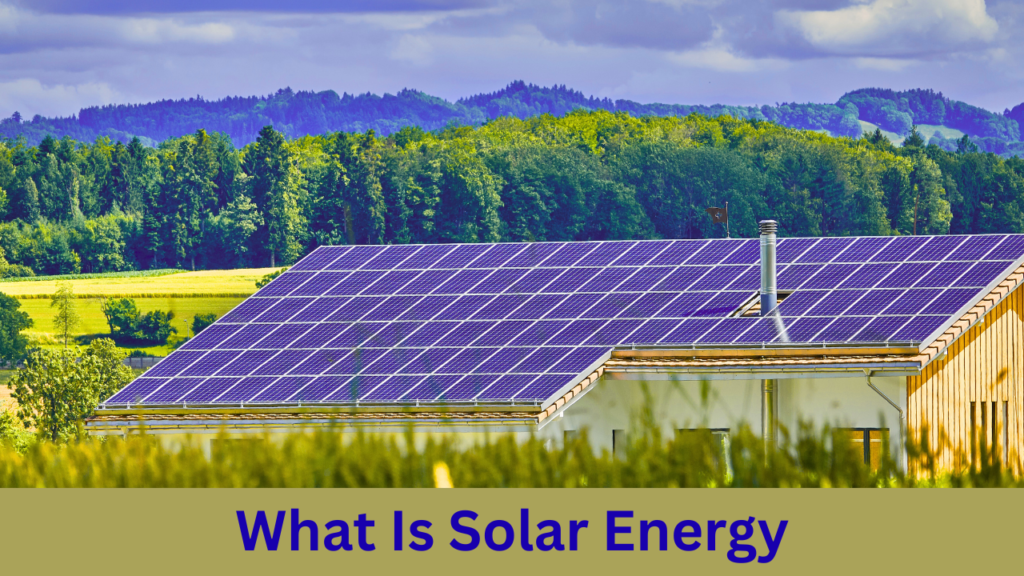
Solar energy is one of the fastest-growing sources of clean and renewable power in the world.
Due to rising electricity prices and the need for sustainable energy, more and more people are considering solar power as a long-term solution.
But before installing a solar system it’s essential to understand ‘what is solar energy’ or how it works.
In this blog post we will explain everything about ‘solar energy’ in simple terms.
What Is Solar Energy? A Simple Definition
Solar energy is the energy we get from sunlight. This sunlight can be converted into electricity using solar panels.
Solar Energy = Sunlight → Electricity
Scientifically, the sun emits photons (i.e. particles of light). When these photons strike a solar panel they generate an electric current.
Solar Energy vs. Solar Power
- Solar Energy = Sunlight received from the sun.
- Solar Power = Electricity generated from solar energy.
How Does Work Solar Energy
Solar energy works by converting sunlight into electricity using a technology called photovoltaics.
When sunlight strikes a solar panel, tiny particles of light called photons collide with the solar cells which are typically made of silicon. These solar cells absorb the photons and release electrons.
The movement of these electrons generates direct current (DC) electricity.
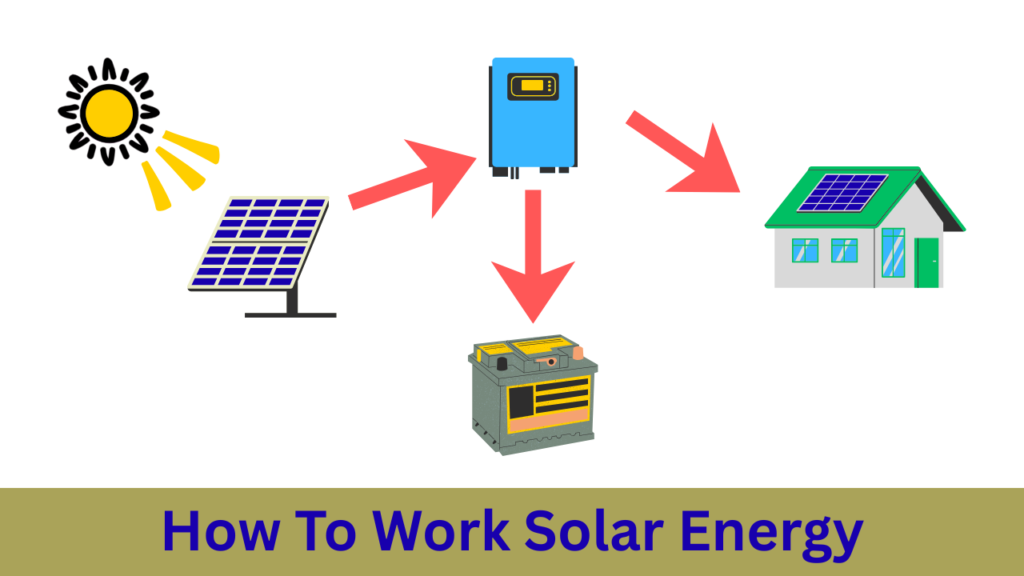
Homes and other appliances require alternating current (AC) electricity. Therefore, the DC electricity generated by the solar panels needs to be converted into alternating current (AC) electricity using a power inverter.
This converted electricity, now AC, can then power lights, fans, televisions, refrigerators, air conditioners, and other household appliances.
- On-grid solar systems: If the system is connected to the grid any excess energy is sent back to the grid through net metering. This provides the customer with a credit on their electricity bill.
- Off Grid Solar System : In off-grid systems, excess energy is stored in batteries and used during power outages at night.
- Hybrid Solar System : Hybrid solar system models combine both functions.
Solar energy has many advantages because it is clean renewable and efficient. This form of energy reduces your electricity costs operates silently and helps reduce carbon emissions.
Solar Energy Advantage And Disadvantage
Advantage of Solar Energy
- Renewable and Unlimited : Solar energy comes from the Sun. The Sun shines every day. Solar energy will never end.
- Reduce Electricity Bill : Installing a solar system can reduce your electricity costs by 70-90%.
- Low Maintenance : Solar panels require minimal maintenance; you only need to clean them every month.
- Environment Friendly : There are no emissions no greenhouse gases and no pollution.
- Government Subsidies : Most countries offer subsidies, tax breaks, and net metering support for solar energy.
- Work in remote areas : Solar energy works well for villages farms and other areas with limited electricity distribution.
- Increase Property Value : Solar energy systems increase the resale value of homes.
Disadvantage of Solar Energy
- High Initial Cost : The initial investment in purchasing solar panels inverters and batteries is very high.
- Weather Dependent : Power output is reduced during cloudy rainy or winter conditions.
- Requires Space : Roof space also known as ground area is required.
- Energy Storage is Expensive : Battery systems significantly increase the overall cost.
- Low Efficiency at Night : Solar energy does not provide electricity when it’s dark it requires batteries or a connection to the electrical grid.
Balanced Summary – The Cost of Solar Energy
Solar energy is one of the cleanest, most readily available, and cheapest ways to generate electricity. It has long-term financial and environmental benefits.
The biggest disadvantage is that it is expensive to install and dependent on sunlight.
Solar energy will be very beneficial for most homes and locations, especially given rising electricity rates and government policy incentives.
FAQ.
1. Does solar panel work in cloudy or rainy weather?
Yes. Solar panels generate electricity even in cloudy and rainy weather, but the output is significantly reduced – typically 20–40% of normal.
2. Do solar panels work at night?
Solar panels require sunlight to generate electricity. For night time use, you will need to rely on the grid or batteries. This is why solar panels don’t work at night.
3. How long do solar panels last?
Good-quality solar panels can last upwards of 25 to 30 years or more, and quality inverters can last up to about 8 to 12 years.
4. How much required for rooftop area of a 1 kW solar system?
Generally, a 1 kW solar system requires 80–100 sq. ft. of shadow-free rooftop area.
5. Do solar panels need to be cleaned?
Yes, dust affects the efficiency of solar panels. Therefore, solar panels should be cleaned once or twice a month with water and a soft cloth.
Pingback: PM Surya Ghar Free Electricity Yojana 2026
Pingback: PM Surya Ghar Free Electricity Scheme: 25 lakh families benefited